




































ANALYSIS | Beyond the Rates: How KRA Cracked the Hard-to-Tax Nut



For nearly a decade, Kenya’s fiscal playbook followed an exhausting, predictable rhythm: draft a Finance Bill, raid the wallets of the same formal workers and corporate giants, face massive public blowback, and watch the economic engine stutter.
But the latest milestone from the Times Tower signals that the Kenya Revenue Authority (KRA) is finally learning a lesson, seasoned economists have preached for years, that revenue sustainability lies in the width of the net, not the weight of the mesh.
The announcement that KRA successfully mobilized Sh7.8 billion from 97,000 brand-new taxpayers who had never remitted direct taxes before is more than a win for the exchequer; it is proof of concept for Tax Base Expansion (TBE). By steering clear of politically toxic and economically dampening rate hikes, the taxman is quietly engineering a structural shift into the elusive informal sector.
M-Pesa, WhatsApp, and eTIMS: The Tech Behind the Numbers
Historically, taxing Kenya's informal sector, which employs nearly 80% of the workforce, was deemed administratively impossible. Transactions were fluid, cash was king, and tracking was nonexistent.
What changed? KRA stopped trying to police traders with muscle and started tracking them with data. Over the past nine months, the authority has aggressively embedded its operations into everyday platforms. The integration of the Electronic Tax Invoice Management System (eTIMS), the rollout of the enterprise API platform GavaConnect, and highly accessible WhatsApp-based tax filing services have effectively lowered the friction of compliance for micro-enterprises.
Rather than demanding small business owners navigate complex, intimidating iTax portals, compliance is being met on the platforms they already use to run their businesses.
The Macro View: A Resilient Trajectory
To understand how significant this Sh7.8 billion informal sector capture is, one must look at it against the backdrop of Kenya’s broader revenue performance.
According to recent data, KRA crossed a historic milestone, pulling in Sh2.038 trillion in cumulative revenue for the first nine months of the 2025/2026 fiscal year. While this fell slightly short of their ambitious Sh2.122 trillion target, it represents a robust 11.4% growth compared to the Sh1.829 trillion collected during the same period in the previous financial year.
|
Revenue Pillar (July – March Comparison) |
FY 2024/2025 (Ksh) |
FY 2025/2026 (Ksh) |
Growth Rate (%) |
|
Domestic Taxes |
1.178 Trillion |
1.301 Trillion |
10.4% |
|
Customs & Border Control |
647.6 Billion |
733.7 Billion |
13.3% |
|
Cumulative Revenue Total |
1.829 Trillion |
2.038 Trillion |
11.4% |
Data Source: Kenya Revenue Authority Performance Reports (FY 2025/26)
The 10.4% bump in domestic taxes directly mirrors these base-expanding efforts. Capturing 97,000 fresh tax streams ensures that this growth isn’t just a result of squeezing more out of existing corporate entities, but is driven by new, organic participants in the formal economy.
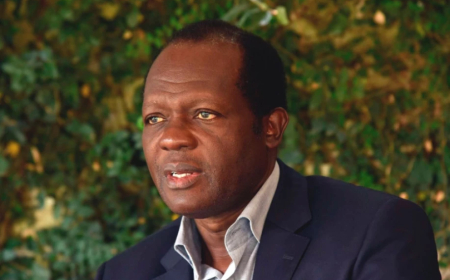
This positive trajectory comes at a critical time of leadership transition, as former Industrialisation Cabinet Secretary Adan Mohamed takes the wheel as the new KRA Commissioner General. He inherits an institutional framework that is fundamentally changing from punitive to facilitative.
For years, the critique of Kenya's tax policy was its lack of equity. A narrow pool of active PIN holders bore the burden of a growing national debt and public wage bill. While Sh7.8 billion from 97,000 new entrants is a modest slice of a Sh2.96 trillion full-year target, its strategic value is immense. It proves that the informal sector isn't inherently untaxable; it was just waiting for a tax system that speaks its language.
To see a detailed breakdown of the official announcement and public response to this shift in fiscal strategy, you can watch this report on 97,000 New Taxpayers Onboarded, which outlines how the government managed to secure these revenues in a compressed timeframe.
What's Your Reaction?
 Like
0
Like
0
 Dislike
0
Dislike
0
 Love
0
Love
0
 Funny
0
Funny
0
 Angry
0
Angry
0
 Sad
0
Sad
0
 Wow
0
Wow
0