





































AI Reshaping Kenya’s Digital Economy as E-Commerce Firms Embrace Automation



Kenya’s fast-growing digital economy is undergoing a major transformation as companies increasingly adopt Artificial Intelligence (AI) to automate operations, raising concerns over the future of employment in the country’s technology and e-commerce sectors.
The debate intensified following reports that e-commerce giant Jumia is allegedly planning to cut 10 percent of its workforce as it expands the use of AI across its operations. The company is said to be integrating AI systems into logistics, customer support, marketing, fraud detection, finance, and seller management to improve efficiency and reduce operational costs.
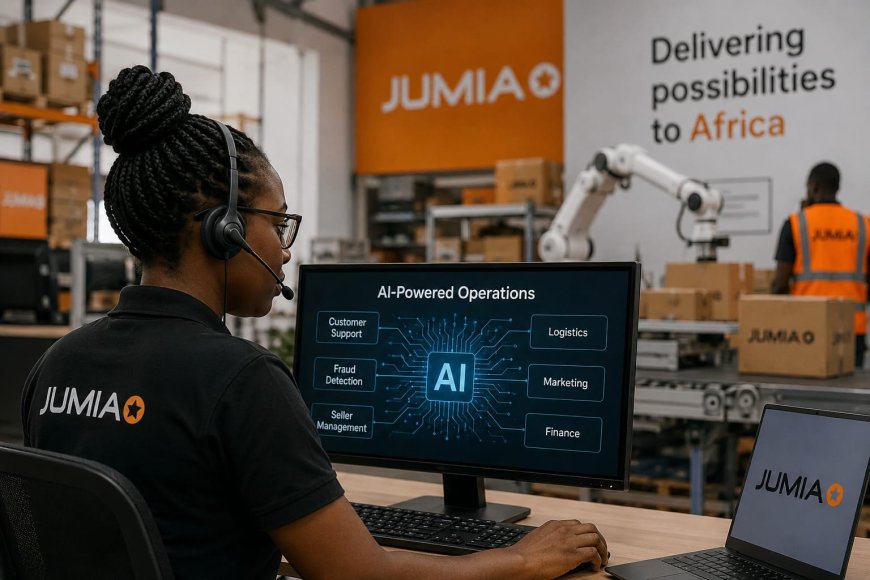
The development comes at a time when online shopping in Kenya continues to record rapid growth, driven by increased internet access, smartphone usage, and the widespread adoption of mobile money platforms such as M-PESA.
E-commerce platforms have transformed how Kenyans purchase electronics, fashion, groceries, and household essentials by offering convenient doorstep deliveries and nationwide pickup networks. However, the same digital transformation that has expanded online business opportunities is now accelerating automation and reducing reliance on human labour.
According to technology analysts, AI-powered systems are increasingly being used to perform repetitive tasks that previously required entire teams, enabling companies to cut costs and improve productivity.
“AI is changing the way businesses operate globally. Companies are now prioritising efficiency, automation, and profitability,” said a Nairobi-based technology analyst. “The concern is whether economies like Kenya are prepared for the social and economic effects of job displacement.”
The alleged restructuring at Jumia has triggered mixed reactions among Kenyans, with some viewing AI as a tool that improves innovation and efficiency, while others fear it could worsen unemployment, especially among young people entering the job market.
Critics argue that although AI creates opportunities for highly skilled workers, it also threatens jobs in customer service, logistics coordination, marketing, and administrative support, areas traditionally employing thousands of people.
Others have questioned whether companies are using AI-driven restructuring to mask financial struggles and cost-cutting measures amid growing pressure from investors to prioritise profitability over expansion.
The concerns extend beyond Kenya, reflecting a wider trend across Africa’s technology sector where firms are increasingly embracing automation and restructuring operations. Companies such as Flutterwave and Sabi have also undertaken workforce adjustments as the industry shifts toward leaner and more efficient business models.
The rapid rise of AI has also reignited debate over Kenya’s education system, with experts calling for urgent curriculum reforms to equip students with digital, technical, and AI-related skills that align with the evolving job market.
Some analysts warn that without proper planning, automation could widen economic inequality by replacing low and middle-income jobs faster than new opportunities are created.
Despite the concerns, technology experts maintain that AI is unlikely to completely replace human talent but will instead redefine the nature of work, increasing demand for workers who can adapt to digital systems and emerging technologies.
As AI adoption accelerates globally, governments, businesses, and learning institutions are now facing growing pressure to balance technological advancement with job protection and economic inclusion.
What's Your Reaction?
 Like
1
Like
1
 Dislike
0
Dislike
0
 Love
0
Love
0
 Funny
0
Funny
0
 Angry
0
Angry
0
 Sad
0
Sad
0
 Wow
0
Wow
0